
Manufacturing Data Integration UK | ERP & Shopfloor Systems
Discover how UK manufacturers can connect shopfloor systems with ERP software, improve production visibility, reduce manual data entry and build more reliable manufacturing operations.
Manufacturing data integration UK
Manufacturing ERP integration
- Shopfloor data integration
- ERP integration for manufacturers
- Manufacturing automation UK
- Production data management
- Smart manufacturing UK
- Manufacturing IT solutions
- Industrial data integration
- Manufacturing systems integration
- Real-time production monitoring
- Factory data management
- Manufacturing digital transformation
- Industrial software integration
- Production visibility software
- Manufacturing operations technology
Manufacturing data integration UK, manufacturing ERP integration, shopfloor systems integration, production data management, smart manufacturing solutions UK, industrial automation integration, manufacturing IT consultancy London, ERP and MES integration, real-time factory monitoring, production visibility, manufacturing workflow automation, industrial data architecture, UK manufacturing technology, connected manufacturing systems, manufacturing software integration.
London, Birmingham, Manchester, Leeds, Sheffield, Coventry, Leicester, Nottingham and manufacturing businesses across the United Kingdom.
Informational + Commercial Investigation.
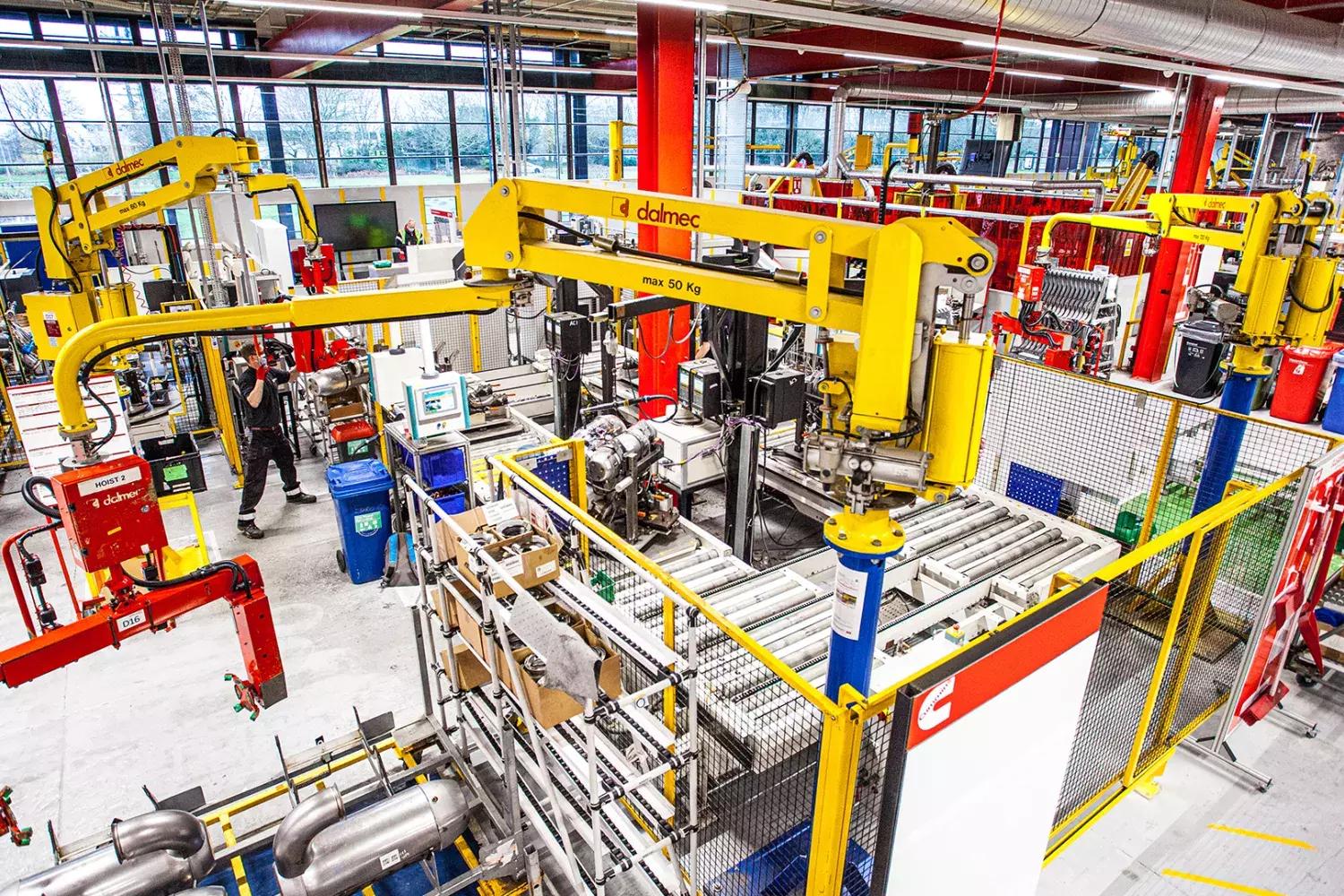
UK manufacturing facility showing connected shopfloor production systems, industrial machinery and ERP data integration.
Introduction: Why Manufacturing Data Integration Matters for UK Factories
Manufacturing businesses depend on accurate information to coordinate production, manage inventory, maintain quality and deliver orders on time. However, many factories still operate with information distributed across separate machines, spreadsheets, production applications, warehouse systems and enterprise resource planning platforms.
A production manager might receive machine updates through one system, check inventory through another application and prepare operational reports using exported spreadsheets. Finance teams may rely on ERP records that are updated only after production or dispatch activities have been completed.
These disconnected processes create information gaps.
When production data is delayed or inconsistent, management may struggle to understand current manufacturing capacity, identify operational bottlenecks or respond quickly to changing customer requirements.
This is where manufacturing data integration becomes important.
Manufacturing data integration connects relevant business applications, production systems, machines and databases so that information can move between them in a structured and reliable way.
For UK manufacturers, this can support better production visibility, more consistent reporting, improved inventory coordination and stronger operational decision-making.
However, connecting factory systems is not simply a matter of installing another software platform. Businesses must understand their existing technology, define data ownership, establish integration requirements and plan for security, reliability and long-term maintenance.
This guide explains how UK manufacturing businesses can approach shopfloor-to-ERP integration, what technologies may be involved, which challenges to consider and how to develop a practical implementation strategy.
1. What Is Manufacturing Data Integration?
Manufacturing data integration is the process of connecting different technology systems used throughout a production environment so that relevant information can be shared and used across business operations.
These systems may include:
- Enterprise Resource Planning (ERP) software.
- Manufacturing Execution Systems (MES).
- Production machinery and industrial controllers.
- Warehouse Management Systems (WMS).
- Inventory management applications.
- Quality management systems.
- Maintenance management platforms.
- Business intelligence and reporting tools.
- Supplier and procurement applications.
Each system serves a different purpose.
An ERP platform may manage purchasing, finance, inventory and order information, while an MES may track production activities and work orders. Industrial equipment may generate machine-level information, while a warehouse platform manages stock movements.
Integration helps connect these different information sources.
For example, when a production order is released, the relevant details may be transferred to the manufacturing execution environment. Production progress can then be recorded and shared with planning or inventory systems, depending on the integration design.
The objective is to reduce unnecessary manual transfers and give authorised employees access to more consistent operational information.
Internal link placement 1: [Explore Nexteck's Manufacturing and Industry Solutions] — link to /industries.
2. Why UK Manufacturers Need Connected Production Systems
A. Production information is spread across different platforms
Manufacturing operations often develop their technology gradually.
A business may introduce new machinery, replace an accounting application or adopt an inventory system without redesigning the entire technology environment.
Over time, the result can be a collection of systems that perform useful individual tasks but do not exchange information effectively.
Employees may need to enter the same information into multiple platforms, creating additional administration and opportunities for errors.
A structured integration approach can help establish consistent information flows between these systems.
B. Management may not have reliable production visibility
Production managers need to understand what is happening across the factory.
Questions may include:
- Which production orders are currently active?
- Which machines are operating?
- Where are production delays occurring?
- Is sufficient material available?
- Which orders are approaching their delivery dates?
- Which quality issues require attention?
When information is stored across disconnected systems, answering these questions may require manual investigation.
Connected production data can make it easier to build operational dashboards and provide management with a clearer view of activity.
C. Inventory and production planning can become disconnected
Production teams need access to accurate material information.
If inventory records are not updated consistently, purchasing and planning decisions may rely on outdated figures.
Integrating production, inventory and ERP information can improve coordination between departments.
However, businesses should establish which system owns each inventory field and how stock adjustments are validated before introducing automated updates.
D. Manual reporting consumes valuable employee time
Many manufacturers still depend on spreadsheets to combine information from production, finance and inventory applications.
This approach may work initially, but becomes harder to maintain as production volumes and reporting requirements increase.
Automated data feeds can reduce repetitive exports and improve the consistency of management reporting.
The aim is not to remove every spreadsheet. It is to identify where repeated manual data handling creates unnecessary effort or operational risk.
3. Understanding the Main Systems Used in Manufacturing Integration
A successful manufacturing integration project begins with understanding what each existing system does.
Enterprise Resource Planning (ERP)
ERP software provides a central environment for managing business functions such as purchasing, inventory, finance, sales orders and production planning.
Manufacturers may use ERP information to coordinate commercial and operational activities.
Integration with other systems can help ensure that production updates, stock information and order details are available to the appropriate business functions.
Manufacturing Execution System (MES)
An MES supports the management and monitoring of manufacturing activities.
Depending on the implementation, it may handle:
- Production order execution.
- Work-in-progress tracking.
- Production scheduling.
- Quality information.
- Machine activity records.
- Operator activity.
- Production performance reporting.
Connecting an MES with ERP can help coordinate business planning with factory execution.
Industrial Control Systems
Industrial control systems operate and monitor machinery and production processes.
Depending on the facility, these may include PLCs, SCADA platforms, sensors and other operational technology.
These systems can produce valuable information, but connecting them to business applications requires careful consideration of operational safety, network separation, security and system reliability.
Warehouse Management Systems
A WMS supports warehouse operations, including stock movements, storage locations, picking and dispatch.
Connecting warehouse and manufacturing information can improve coordination between material availability and production requirements.
Business Intelligence Platforms
Business intelligence tools transform operational data into reports, dashboards and management insights.
When the underlying data is reliable, manufacturers can analyse production trends, stock performance, order fulfilment and operational efficiency.
4. How Shopfloor-to-ERP Integration Works
Shopfloor-to-ERP integration connects production-level information with wider business systems.
The architecture depends on the factory's equipment, existing applications, data requirements and security constraints.
A simplified information flow might look like this:
Production machinery → Data collection layer → Manufacturing execution system → Integration layer → ERP → Reporting dashboard
Each component has a defined responsibility.
Step 1: Capture production information
Relevant information may be collected from machines, industrial controllers, operator terminals or production applications.
Examples include:
- Machine operating status.
- Production quantities.
- Work-order progress.
- Downtime events.
- Production timestamps.
- Quality inspection results.
Only the information needed for the intended business purpose should be collected.
Step 2: Validate and structure the information
Different machines and applications may represent information in different formats.
Before transferring data, the integration architecture should define common identifiers, timestamps, units of measurement and validation rules.
For example, a production quantity must have a consistent unit, while machine and work-order identifiers must match the relevant business records.
Step 3: Transfer information through an integration layer
An integration layer manages communication between applications.
Depending on the environment, this may involve APIs, middleware, message queues, connectors or carefully designed data pipelines.
The integration layer should also handle errors, retries, duplicate messages and temporary system unavailability.
Step 4: Update the relevant business system
Validated information can then be transferred to the appropriate ERP, MES, inventory or reporting environment.
Not every production event needs to update every system. Data flows should be designed according to business requirements.
Step 5: Make information available for operational decisions
Once information is connected, authorised employees can use dashboards and reports to understand production activity.
The quality of these insights depends on the accuracy, completeness and timeliness of the source data.
5. Important Technologies Behind Manufacturing Data Integration
APIs and middleware
Application Programming Interfaces (APIs) allow applications to exchange information through defined interfaces.
Middleware can coordinate communication between systems that use different formats or technical architectures.
For manufacturers, APIs may support connections between ERP platforms, inventory applications, customer systems and reporting tools.
OPC UA
OPC UA is an industrial communication standard used to support secure and structured information exchange between industrial systems.
It may be relevant when connecting machinery, automation environments and higher-level applications.
The appropriate implementation depends on equipment capabilities and the factory's operational architecture.
MQTT
MQTT is a lightweight messaging protocol that can support communication between connected devices and applications.
It may be useful in industrial environments where telemetry and event-based information need to be transmitted efficiently.
Industrial IoT platforms
Industrial Internet of Things platforms can collect and organise information from connected equipment and sensors.
Depending on the architecture, they may support equipment monitoring, condition analysis and production visibility.
Data warehouses and reporting systems
A data warehouse or analytical data platform can combine information from multiple business systems for reporting and analysis.
This can help manufacturers build a consistent view of production, inventory, finance and order fulfilment.
Internal link placement 2: [See Nexteck's Technology and Industry Capabilities] — link to /industries.
6. Common Challenges in Manufacturing Systems Integration
Legacy machinery and older software
Some factories use equipment and software that were introduced many years ago.
These systems may not provide modern APIs or standard communication interfaces.
Integration may require gateways, adapters or carefully designed intermediary applications.
Before selecting an approach, businesses should assess the available interfaces and determine whether modifications could affect equipment warranties, support arrangements or operational reliability.
Inconsistent data formats
Different applications may use different naming conventions, units and identifiers.
For example, one system may identify a product using an internal code while another uses a supplier reference.
Without mapping and validation, information may be transferred incorrectly.
A data dictionary and agreed master-data rules can help address this issue.
Cybersecurity and operational technology risks
Connecting operational technology with enterprise IT systems introduces security considerations.
Manufacturers should assess:
- Network segmentation.
- User access permissions.
- Authentication.
- Remote access arrangements.
- System patching.
- Monitoring and incident response.
- Backup and recovery procedures.
- Supplier access and responsibilities.
Production environments require particular care because security changes can affect availability and operational safety.
Integration projects should involve relevant IT, OT and engineering stakeholders.
Unclear responsibility for data
If several systems can update the same information, conflicting records may occur.
For example, the ERP and warehouse platform might both contain stock quantities.
The business should decide which system is authoritative for each data category and define how changes are synchronised.
Integration downtime
A connected environment introduces dependencies between applications.
If one service becomes unavailable, related processes may be affected.
The design should include monitoring, error handling, recovery procedures and a suitable manual fallback for critical activities.
7. A Practical Roadmap for UK Manufacturers
A phased implementation can reduce disruption and help businesses validate the architecture before expanding it.
Phase 1: Assess the existing environment
Document current machinery, ERP platforms, MES applications, inventory tools, databases and reporting systems.
Identify where employees manually transfer information and where data is delayed or inconsistent.
Record the most important operational problems rather than assuming every system needs immediate replacement.
Phase 2: Prioritise integration opportunities
Rank potential projects according to:
- Business impact.
- Operational urgency.
- Implementation complexity.
- Cost.
- Security requirements.
- Expected disruption.
- Availability of technical interfaces.
A production-order integration may provide greater value than connecting a low-priority reporting application.
Phase 3: Define the target architecture
Document how systems will communicate, which application owns each data category and how failures will be handled.
Include security, monitoring, scalability and maintenance requirements.
Phase 4: Run a controlled pilot
Select one production line, process or information flow.
Test the integration with representative data and validate the results with production, engineering and IT teams.
Do not expand until the pilot demonstrates acceptable accuracy, reliability and operational value.
Phase 5: Expand and monitor
Introduce additional integrations in manageable stages.
Monitor data quality, integration failures, production visibility and the amount of manual work remaining.
Update documentation and assign ownership for ongoing maintenance.
Internal link placement 3: [Review the Nexteck SME Strategy & Tracking Toolkit] — link to /toolkit.
8. How Manufacturing Data Integration Supports Better Business Decisions
The value of integration is not limited to moving information between applications.
When data is reliable and available to the right people, management can make better-informed operational decisions.
Improved production visibility
Managers can understand production progress without depending entirely on manual updates.
More consistent inventory information
Connected information can help coordinate material requirements, stock movements and production activity.
Better operational reporting
Automated information flows can reduce the effort required to combine reports from different platforms.
Stronger quality traceability
Where the appropriate production and quality information is recorded, businesses can improve their ability to investigate defects and review manufacturing history.
More informed capacity planning
Historical production data may help management understand equipment utilisation, recurring delays and production constraints.
These outcomes depend on implementation quality. Integration alone does not guarantee higher productivity, lower costs or fewer defects.
9. How to Measure the Success of a Manufacturing Integration Project
Manufacturers should establish baseline measurements before implementation.
Potential KPIs include:
| KPI | What it measures |
|---|---|
| Manual data-entry hours | Time spent transferring information between systems |
| Production reporting delay | Time between an operational event and its visibility in reports |
| Data accuracy | Percentage of records meeting validation requirements |
| Integration failure rate | Frequency of failed or incomplete data transfers |
| Inventory record accuracy | Agreement between system records and verified stock |
| Production order visibility | Ability to track orders across defined stages |
| Downtime reporting completeness | Availability of reliable downtime information |
| Order fulfilment performance | Ability to meet planned delivery commitments |
The most appropriate KPIs depend on the integration's objectives.
For example, a project designed to improve production reporting should measure reporting delay and data completeness rather than relying only on general productivity figures.
10. Why UK Manufacturers Should Plan Integration Before Buying More Software
When a factory encounters operational problems, the immediate response may be to purchase another application.
However, adding software without understanding the existing architecture can create more complexity.
Before buying a new platform, assess whether the issue is caused by:
- Missing functionality.
- Poor system configuration.
- Inadequate data quality.
- Lack of integration.
- Unclear operational procedures.
- Missing reporting capabilities.
- Insufficient user training.
In some situations, integration or configuration may solve the problem without introducing another subscription.
In others, a new platform or custom software component may be justified.
The important point is to make technology decisions based on the actual operational requirement.
Internal link placement 4: [Explore Nexteck's Manufacturing Technology Solutions] — link to /industries.
Conclusion: Build a Connected Manufacturing Environment Around Real Operational Needs
Manufacturing data integration can help UK factories connect shopfloor systems, ERP platforms, inventory applications and reporting environments.
The biggest opportunity is not simply collecting more data. It is making relevant information accurate, accessible and useful across production and business operations.
Start by mapping existing systems, identifying manual information flows and prioritising the integration opportunities that matter most. Define clear data ownership, establish security controls, test the architecture and expand in manageable stages.
A well-planned integration strategy can provide a stronger foundation for production visibility, operational reporting and future manufacturing technology investments.
Looking to connect production systems, ERP platforms or industrial data workflows?
Explore Nexteck's industry solutions and Nexteck's technology strategy services to understand how a structured technology assessment can help identify the right next steps for your manufacturing business.
Frequently Asked Questions
What is manufacturing data integration?
Manufacturing data integration connects systems such as ERP, MES, machinery, inventory applications and reporting platforms so relevant information can be shared across business operations.
What is shopfloor-to-ERP integration?
Shopfloor-to-ERP integration connects production-level information with enterprise systems. It can help transfer production progress, work-order information and other validated operational data into business applications.
Why is ERP integration important for manufacturers?
ERP integration can improve coordination between production, purchasing, inventory, finance and order management by reducing unnecessary manual information transfers.
What is the difference between ERP and MES?
ERP generally supports wider business management functions, while MES focuses on managing and monitoring manufacturing execution activities. They often provide complementary capabilities.
Can older manufacturing machines be integrated with modern ERP systems?
Potentially, yes. The approach depends on the machine's available interfaces, communication protocols, safety requirements and the architecture of the existing systems.
How long does manufacturing systems integration take?
There is no universal timeline. It depends on the number of systems, data quality, technical compatibility, security requirements and testing scope. A limited pilot is often a sensible starting point.
What is the biggest challenge in manufacturing data integration?
Common challenges include inconsistent data, legacy equipment, unclear system ownership, security requirements and the complexity of connecting different applications reliably.
How can manufacturers measure integration ROI?
They can compare implementation and maintenance costs with measurable improvements such as reduced manual reporting effort, better data accuracy, faster reporting and improved operational visibility.